





|
Quantity
|
Total
|
||
|
|
|||
|
|
|||
Insulated medical containers and thermal bags
Purpose and features
Passive insulated containers and thermal bags are used for medical cold chain transport with an appropriate coolant and packing arrangement. Selection depends on the shipment requirements and route conditions.
Compare the available product ranges
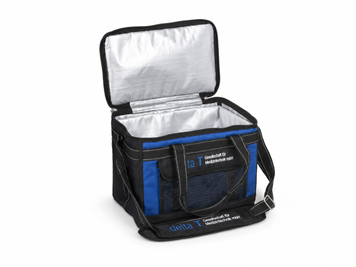
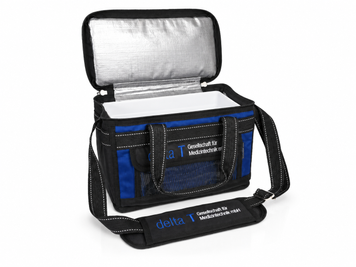
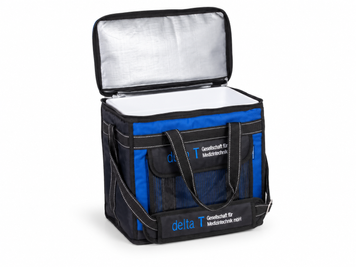
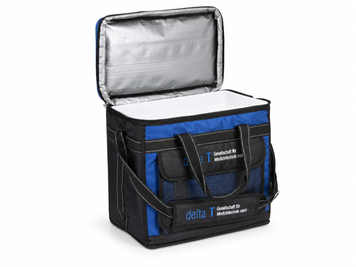
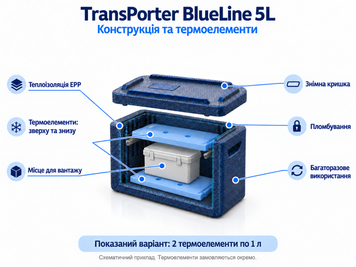
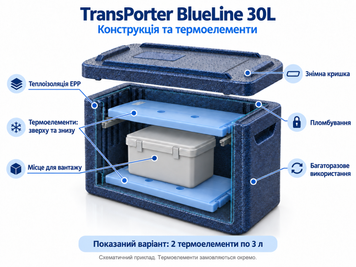
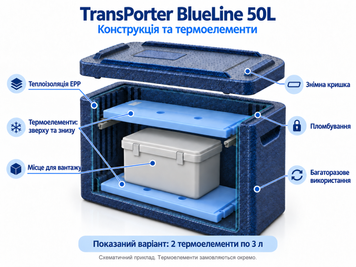
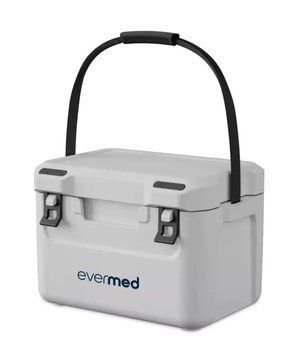
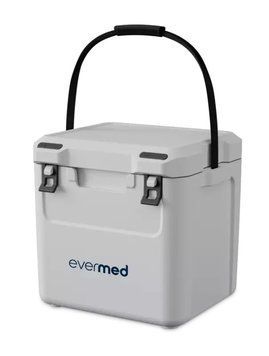
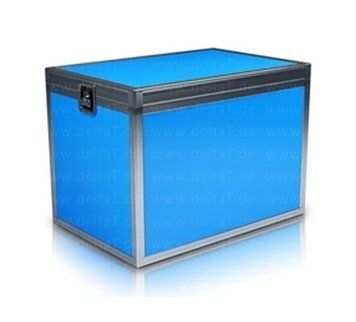
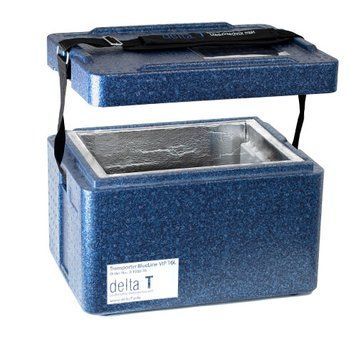
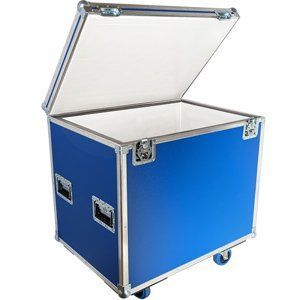
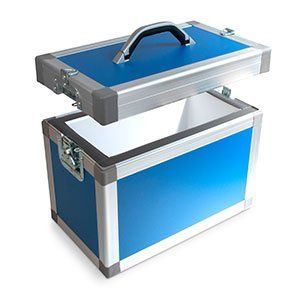
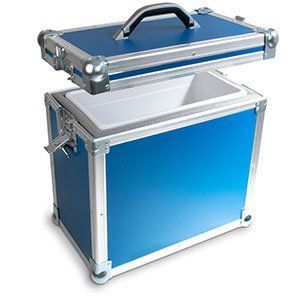
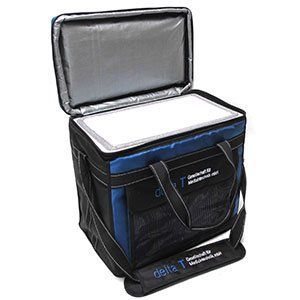
Delta T BlueLine Bag soft thermal bags support portable handling, while Transporter BlueLine rigid containers provide a protective outer case. Evermed IC insulated containers are available with 15-litre and 28-litre internal capacities. Review each product page for the exact construction and dimensions.
Plan the usable payload space
Allow space for the shipment packaging, coolant packs and temperature monitoring device. Nominal internal capacity is not the same as the final usable payload after packing. Compare the complete package dimensions, handling needs and loading arrangement.
Temperature performance depends on the prepared system
Specify the target temperature, route duration and expected ambient conditions. Select and condition coolant packs according to the validated packing procedure for the shipment. Passive insulation does not actively regulate temperature; no universal holdover duration should be assumed from container capacity alone.
For routes requiring active cooling, compare portable medical refrigerators and freezers.
What to compare before ordering
| Criterion | What to verify |
|---|---|
| Route | Total time to receipt, waiting, seasonal conditions and time margin |
| Load | Package dimensions, usable loading capacity and required conditions |
| Equipment | Power supply or coolant packs and pre-loading preparation |
| Records | Sensor location, recording interval and acceptance criteria |
Questions before selection and procurement
Which matters more: volume or temperature holding time?
Assess both together with the load and route. A stated holding time is meaningful only with its test conditions and system preparation method.
How should two transport configurations be compared?
Use equivalent loads, ambient conditions, preparation and test end criteria. Differences in these conditions can change the comparison.
What logger information is required?
Range, accuracy, sensor location, recording interval and report retrieval method. Define load acceptance criteria in advance.
What is needed to compare quotations?
A technical specification and an equivalent equipment list for each option. Specify quantity, installation or use location, compatible accessories and documentation requirements. This supports comparison of the complete cost of the required solution.
Configuration and documentation
Record the exact model, version, standard equipment and optional items in the quotation. Request the manual and specification with the conditions under which performance figures are determined. Agree procurement documentation, availability, delivery, warranty and service work for the specific supply.
Models in the catalogue
Open the model page to check specifications, configuration and the current offer:
Related categories and useful information
What the Delta T price includes
The product price covers the base bag or container and the stated standard equipment. Coolant elements, TempShell frames and a temperature logger are ordered separately. The complete configuration is selected for the load and route; its contents and price are recorded in the quotation.
BlueLine Bag figures are nominal model volumes. Container figures are capacities in the specification: TransPorter BlueLine 20L and 30L have capacities of 21 L and 31 L respectively. Usable payload space is reduced by coolant elements.
Blood and blood component transport
Start with the specific blood component, number and dimensions of blood bags, temperature protocol and route duration. Red cell components, platelets and frozen plasma require different transport arrangements; a single universal packing configuration is unsuitable.
Provide the temperature range required by your protocol, minimum and maximum loads, ambient conditions, total journey and waiting time, and logger reporting requirements. The model, coolant preparation, packing arrangement and verification of the specific configuration are then agreed.