


|
Quantity
|
Total
|
||
|
|
|||
|
|
|||
Ophthalmology
ENT and audiology
Neurophysiology and sleep medicine
Gynecology
Urology
Pulmonary function testing
Physiotherapy
Dermatology
Endoscopy by specialty
Planning your equipment configuration
Medical practice equipment is grouped by specialty: ophthalmology, ENT and audiology, neurophysiology, gynecology, urology, pulmonary function testing, physiotherapy and dermatology. Start with the practice specialty, then explore the selection criteria and models in each category.
Select equipment and request a quotation
Describe your department’s requirements to prepare an equipment list for review.
Equipment categories and intended applications
| Category | Purpose and selection considerations |
|---|---|
| Ophthalmic equipment | Ophthalmic equipment supports refraction measurements, corneal examinations and other diagnostic tasks. The appropriate setup depends on the practice’s scope, patient workload and examination methods. |
| ENT treatment units | An ENT treatment unit combines working modules and instruments for an otolaryngology practice. Depending on the configuration, functions include suction, liquid spraying, air delivery, examination lighting and instrument preparation. |
| Tympanometers and middle-ear analyzers | Tympanometers measure the acoustic characteristics of the middle ear as pressure in the ear canal changes. Depending on the model and licences, systems may also support acoustic reflex testing or screening pure tone audiometry. |
| Neurophysiology and sleep medicine | This section brings together equipment for recording bioelectrical signals in neurophysiology. Electromyography systems support neuromuscular studies, while electroencephalography systems record the electrical activity of the brain. |
| Video colposcopy systems | A video colposcope sends magnified camera images to a compatible monitor or computer. Optics, illumination and software support image capture and examination archives in gynecology practices. |
| Urodynamics systems | Urodynamics systems record pressure, flow and other parameters of lower urinary tract function. Modular workstations serve urology, urogynecology and functional diagnostic departments. |
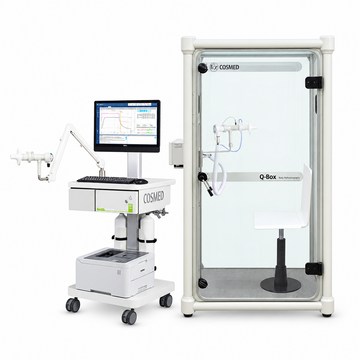
| Body plethysmographs | Body plethysmographs use an airtight cabin to measure static lung volumes and airway resistance. They complement spirometry testing. |
| High-intensity laser therapy systems | This category covers high-intensity laser therapy systems. Selection factors include wavelengths, adjustable output power, emission modes and compatible applicators. |
| Fractional CO₂ laser systems | A fractional CO₂ laser uses a scanner to create a controlled grid of treatment microspots. Emission parameters, density and scan geometry depend on the capabilities of the specific system. This category covers equipment for professional practices and clinics. |
| Bronchoscopes | This category includes flexible bronchoscopes and video bronchoscopes. Compare distal end diameter, instrument channel, working length and angulation. |
| Hysteroscopes | Hysteroscopes provide endoscopic examination of the uterine cavity. Compare telescope diameter, sheath design and instrument compatibility. |
| Resectoscopes | A resectoscope comprises optics, a working element, sheaths and an electrode. Compare diameter, length, viewing angle and working element controls. |
| Ureterorenoscopes | Ureterorenoscopes provide visual examination of the ureter and renal pelvis. Compare rigid or flexible construction, diameter, working length and instrument channel. |
Compatibility and site preparation
Prepare a list of examinations and procedures, expected workload and a room plan. List existing equipment, computers, utilities, consumables and result-export requirements separately. This helps define a compatible configuration and distinguish core instruments from expansion options.
Configuration, pricing and procurement
For a quotation, specify the required configuration, number of instruments, installation city and services needed. Agree options, consumables, commissioning and staff familiarisation separately. Documentation, delivery times and warranty terms are specified in the quotation and contract. See the model page for its current price or quotation request option.
Questions before selection and procurement
Where should planning a new practice begin?
Begin with the intended services and expected examination volume. Use these to define methods, core instruments, workstations and infrastructure.
Can a practice be equipped in stages?
Yes, provided compatibility and expansion requirements are planned. Separate the initial configuration, optional modules and equipment requiring additional utilities.
Where are bronchoscopes and hysteroscopes listed?
They are part of endoscopy equipment. Specialty links here lead to those categories within the surgery and endoscopy section.
How should equipment costs be compared?
Compare the same instruments, modules, licences, accessories and services. Account separately for consumables, room preparation and planned maintenance.