
|
Quantity
|
Total
|
||
|
|
|||
|
|
|||
Breast milk station for maternity hospitals and NICUs
A breast milk station for a maternity hospital or neonatal intensive care unit (NICU) is an organised set of equipment for receiving, identifying, short-term refrigeration, freezing, controlled thawing and warming of human milk before feeding. Oselya prepares the configuration according to bed capacity, daily milk volume, the facility's procedures and temperature-monitoring requirements.
Purpose and features
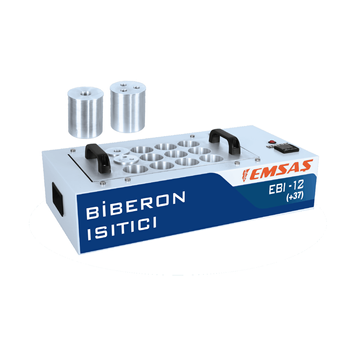
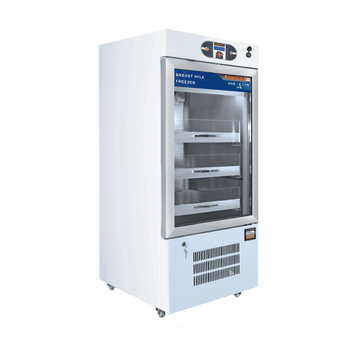
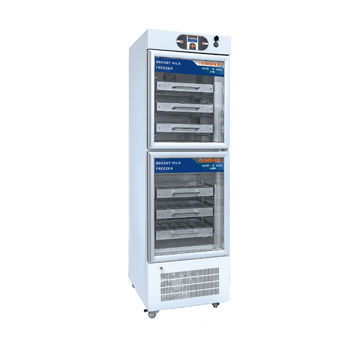
The available solution is built around EMSAS ANS breast milk refrigerators and refrigerator-freezers together with EMSAS EBI dry bottle warmers. Breast pumps, containers, labelling, transport, pasteurisation, laboratory control and consumables are selected separately according to the technical specification.
Three levels of breast milk station configuration
1. Basic station for a maternity hospital
- EMSAS ANS-D425 for combined +4 °C and −20 °C storage;
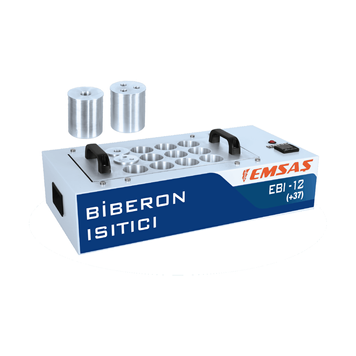
- EMSAS EBI-12 for controlled dry warming of up to 12 bottles;
- a temperature data logger, bottle identification and a basic transport set;
- selection of compatible containers and preparation of the equipment specification.
This is a starting configuration for facilities that need an organised workflow for a mother's own milk without establishing a complete donor human milk bank.
2. Extended station for NICU
- separate refrigerated storage in the EMSAS ANS-E175;
- combined storage in the EMSAS ANS-D425;
- EMSAS EBI-12 or EMSAS EBI-24, depending on the required throughput;
- clinical breast pumps, individual expression sets, bottles, caps and colostrum collectors;
- insulated transport containers, temperature loggers, a label printer and a scanner.
The extended configuration is calculated for units with a higher number of feeds and a need to separate refrigerated and frozen milk.
3. Human milk bank infrastructure
- separate areas for raw and processed milk;
- dedicated refrigerators and freezers with continuous temperature recording;
- a Holder pasteuriser, milk analyser and equipment for microbiological control;
- batch traceability, barcoding, specialised containers and consumables;
- medical furniture, backup power, commissioning, training and service.
A human milk bank is designed individually. The pasteuriser, analyser, laboratory equipment and consumables are not part of the current EMSAS product range and are included in a proposal only after the manufacturer, documentation and supply terms have been verified.
Project support
We collect the input data, define the required temperature zones and capacity, check bottle compatibility, prepare the equipment list and develop a technical specification. For each supply project, the exact configuration, production time, conformity documents, installation conditions, staff training and service are confirmed separately.
Request a configuration
Send us the number of beds, approximate feeds per day, required storage modes and the equipment already available at the facility. We will prepare a basic, extended or individual configuration without unnecessary items.
What to compare before ordering
| Criterion | What to verify |
|---|---|
| Intended use | Workflow and functions defined by the institution’s responsible specialist |
| Compatibility | Existing equipment, accessories, consumables and interfaces |
| Placement | Dimensions, movement, connections and staff access |
| Procurement | Exact configuration, documentation, training and service terms |
Questions before selection and procurement
How should a technical specification be prepared?
Describe the workflow, required functions and compatibility with existing equipment. The institution’s responsible specialist defines clinical application requirements.
Why compare configurations rather than just base prices?
Quotations may differ in modules, accessories, consumables and connection work. Compare equivalent scopes of supply.
What should be checked before approving an order?
Model and version, intended-use documentation, included equipment, connections, service terms and commissioning arrangements.
What is needed to compare quotations?
A technical specification and an equivalent equipment list for each option. Specify quantity, installation or use location, compatible accessories and documentation requirements. This supports comparison of the complete cost of the required solution.
Configuration and documentation
Record the exact model, version, standard equipment and optional items in the quotation. Request the manual and specification with the conditions under which performance figures are determined. Agree procurement documentation, availability, delivery, warranty and service work for the specific supply.