
|
Quantity
|
Total
|
||
|
|
|||
|
|
|||
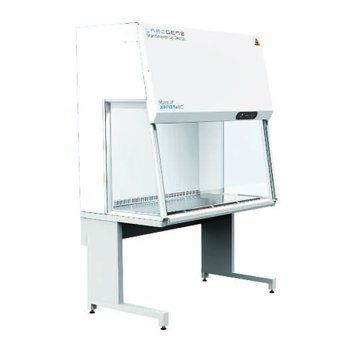
Class I Laboratory Safety Cabinets
A Class I cabinet draws air inward through the front opening to help contain particles and aerosols within the work zone. Exhaust air is filtered before it is returned to the room or discharged outdoors, depending on the configuration.
What is a Class I laboratory safety cabinet
Key limitation: a Class I cabinet protects the operator and environment, but not the product. Laboratory air enters the work zone, so materials vulnerable to microbial contamination require a suitable Class II biological safety cabinet.
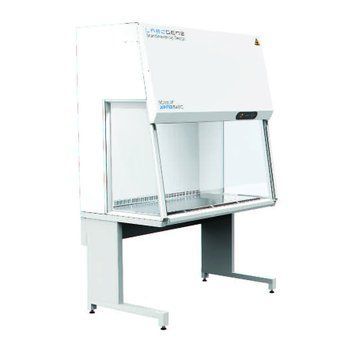
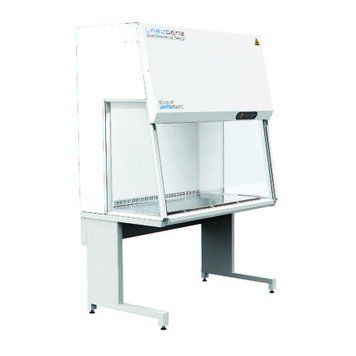
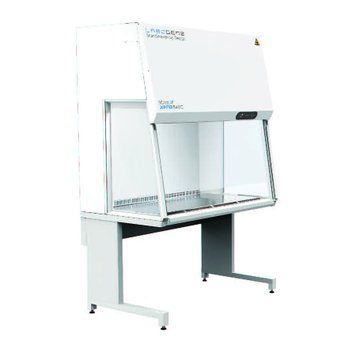
LaboGene ScanLaf Jupiter range
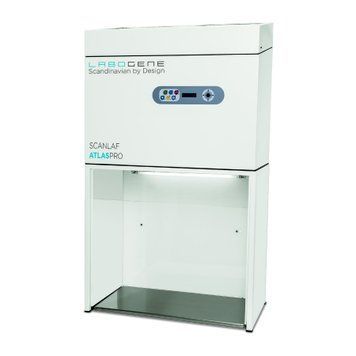
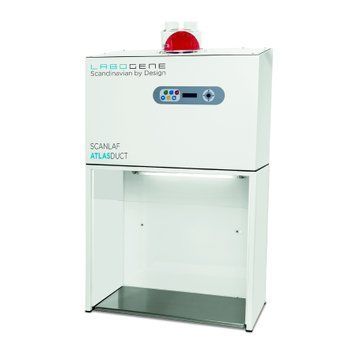
The Jupiter range is available in 900, 1200, 1500 and 1800 mm working widths. Depending on the task, configurations include HEPA filtration, an additional carbon filter or connection to an external exhaust system. Compact Atlas Pro and Atlas Duct models extend the range for work areas with limited space.
When a Class I cabinet is appropriate
This equipment is considered for processes involving powders, particles and aerosols when containment and operator protection are the main requirements. Filter compatibility, suitability for specific substances and external exhaust requirements must be confirmed before ordering.
How to select a configuration
Provide the materials handled, process type, required working width, available ventilation and room constraints. Compare laminar flow cabinets for product protection and the wider laboratory safety range.
Comparing Jupiter, Atlas Pro and Atlas Duct
| Working area | Dimensions of equipment and materials inside; required working width |
|---|---|
| Filtration | Contaminant types and filter compatibility with the actual materials |
| Ventilation | Air return or exhaust arrangement specified for the model |
| Installation and service | Dimensions, utility connections and access for filter replacement and checks |
Class I cabinet questions
Does a Class I cabinet protect the product?
No. This cabinet type is intended for operator and environmental protection; the product is exposed to laboratory air. Sample protection requirements must be considered when selecting the equipment type.
Should I choose Jupiter or a compact Atlas?
Compare the required working area, installation dimensions and ventilation configuration. Jupiter is available in several sizes; Atlas Pro and Atlas Duct are options for compact workstations.
Is any filter suitable for a given substance?
No. Check filter type and material compatibility against the documentation for the selected configuration. Agree the substances, workflow and air discharge arrangement before ordering.
What information is needed for a quotation?
Provide the model or required dimensions, materials, operations, available ventilation, installation location and accessories so that a comparable quotation can be prepared.
Class I cabinet pricing and ordering
Class I cabinet pricing depends on the selected Jupiter, Atlas Pro or Atlas Duct model and the agreed configuration. Specify the materials, workflow, working width and available ventilation. Confirm filters, exhaust connections, accessories, delivery, installation and service as separate quotation items.
Models in the catalogue
Open the model page to check specifications, configuration and the current offer: