


|
Quantity
|
Total
|
||
|
|
|||
|
|
|||
Laboratory thermostatic baths and circulators
A thermostatic bath maintains a defined heat-transfer-fluid temperature for processing samples directly in the bath or in a connected external circuit. Depending on the configuration, the equipment can heat, cool or operate in a cryostatic temperature range.
LaboGene ScanCool equipment types
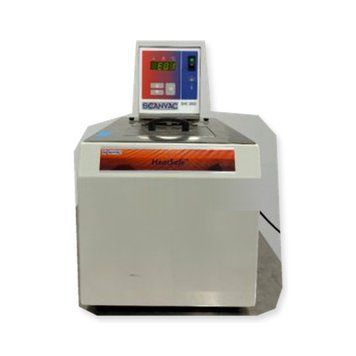
- HeatSafe — 8, 18 or 28 L heating baths with operating temperatures up to +150 °C;
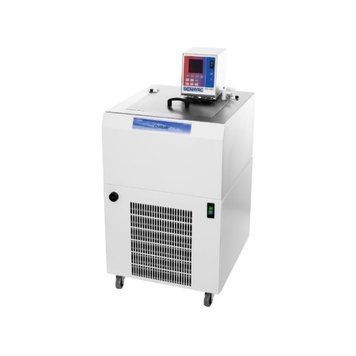
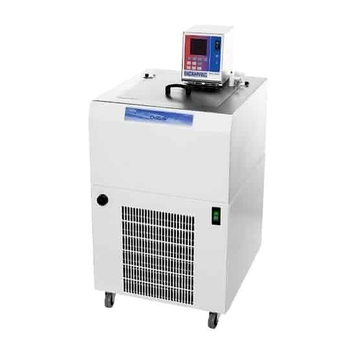
- ChillSafe — 8 or 18 L refrigerated circulating baths reaching approximately −30…−35 °C depending on configuration;
- CryoSafe — 8 or 18 L cryostatic circulating baths in configurations reaching −50 or −90 °C;
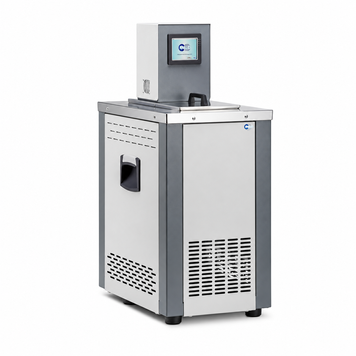
- HeatControl SHC 2000-1 — a separate circulation thermostat for use with a bath or external circuit.
Key selection parameters
Define the required temperature range, bath volume, stability, thermal load, heat-transfer fluid, external-circulation requirements, pump flow and pressure, dimensions and safety functions. For an external circuit, also consider hose length, insulation and connection compatibility.
Applications
Laboratory baths and circulators are used for sample preparation, temperature control of reaction vessels and measuring cells, reactor jackets and test circuits. The operating regime and heat-transfer fluid must match the method and manufacturer instructions.
For a quotation, provide the required range, volume, process type and external-circuit parameters. OSELY can compare configurations and select compatible accessories.
What to compare before ordering
| Criterion | What to verify |
|---|---|
| Process | Method, materials, required outcome and constraints |
| Working area | Capacity, accessory dimensions, sample or operator count |
| Utilities | Power, gases, water, vacuum or exhaust as required by the model |
| Acceptance | Documentation, commissioning checks and service access |
Questions before selection and procurement
Is a matching headline specification enough to compare models?
No. Compare the full configuration, operating conditions, accessories and method constraints. Maximum figures may apply only under specified loads.
How should room readiness be checked?
Provide installation dimensions and available utilities. Compare them with the model manual before agreeing the supply configuration.
What belongs in the specification?
The main instrument, modules, holders, consumables, documentation, installation and acceptance checks. List optional equipment separately.
What is needed to compare quotations?
A technical specification and an equivalent equipment list for each option. Specify quantity, installation or use location, compatible accessories and documentation requirements. This supports comparison of the complete cost of the required solution.
Configuration and documentation
Record the exact model, version, standard equipment and optional items in the quotation. Request the manual and specification with the conditions under which performance figures are determined. Agree procurement documentation, availability, delivery, warranty and service work for the specific supply.
Models in the catalogue
Open the model page to check specifications, configuration and the current offer: